

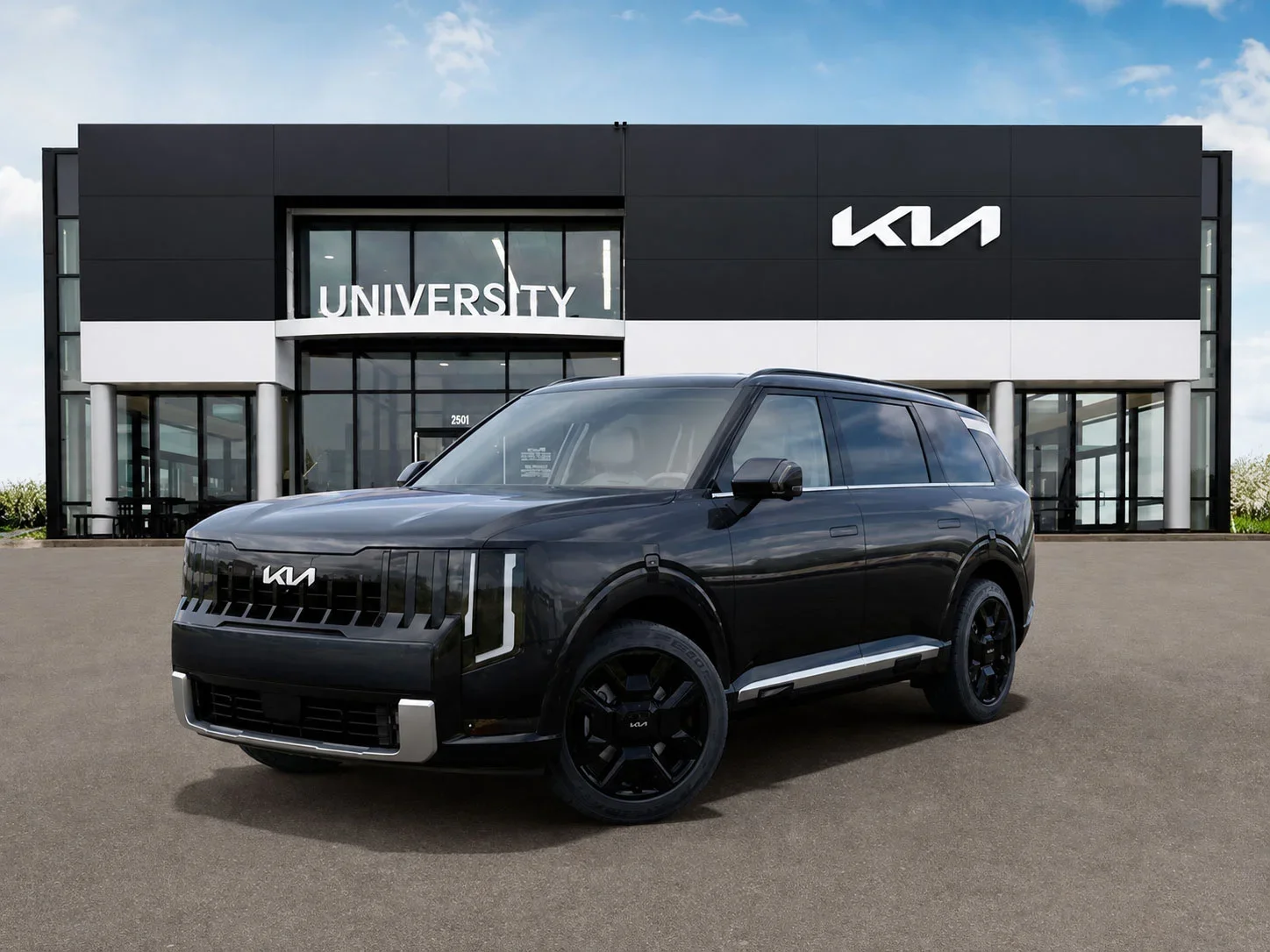
At the same time, we hear a lot of myths that make shoppers hesitate. Some drivers worry that hybrids only work in big-city traffic, or that the numbers on the window sticker are the exact miles per gallon they will see every day. Others are unsure how the Texas heat or short trips around town will affect MPG.
In this post, we clear up some of the most common fuel economy myths we hear about Kia hybrid cars. We explain how MPG really works, why driving style and routes matter, and how different hybrids fit different Central Texas routines. Our goal is to give you simple, honest information so you can decide if a Kia hybrid fits the way you actually drive.
Real-world fuel economy is never just one number. It depends on things like how hard you press the gas, how fast you like to cruise on I-35, how much time you spend in traffic, and how often the AC is running. Once you understand that, the myths start to fall apart.
Myth: Kia Hybrids Only Shine in Big-City Traffic
A common myth is that hybrid technology only helps in slow, heavy city traffic, not on open highways around Waco, Temple, or smaller Central Texas towns. People picture the car switching to electric power only when it is crawling along.
Kia hybrid systems are more flexible than that. They use:
- Electric motors to help the car get moving from a stop
- Regenerative braking to turn slowing and braking into stored battery power
- Smart control of the gas engine at cruising speeds to keep it in an efficient range
In simple terms, the electric motor gives a boost when you pull away from a light, and the system saves energy whenever you slow down. That alone helps during errands, school drop-offs, and traffic near campus. But on the highway, the gas engine does not just run on its own without help. The hybrid system works to keep it from working harder than it needs to.
Many Waco drivers have mixed routines. Maybe you drive city streets around home, cut across town, then hop on I-35 toward Dallas or Austin. That blend of city and highway can be a great match for Kia hybrid cars, because the system keeps helping in both settings.
Some Kia hybrids are also tuned to do very well at steady highway speeds. That makes them a strong choice for:
- Long drives along I-35
- Summer vacation trips across Texas
- Weekend visits to lakes and nearby state parks
So hybrids are not just for big cities. They can make just as much sense for Central Texas drivers who split time between town and open road.
Myth: EPA MPG Numbers Are What You Will Always Get
Another common belief is that the fuel economy on the window sticker is a promise. If the sticker says a certain MPG, some drivers think they should see exactly that number on every tank.
EPA fuel economy ratings are created in controlled lab tests. They are meant as a comparison tool, so you can see how one vehicle stacks up against another under the same test. They are not a guarantee of what every driver, in every type of traffic and weather, will see.
Real-world MPG in Kia hybrid cars can go up or down based on things like:
- Driving speed, especially on the highway
- Hard acceleration and sudden braking
- Extra weight from cargo or passengers
- Tire pressure that is too low
- Heavy AC use in hot Waco weather
The good news is that some simple habits can help you match or even beat the posted numbers. For example:
- Accelerate smoothly instead of flooring the gas
- Keep speeds closer to the posted limit instead of far above it
- Check tire pressure on a regular basis
- Plan routes to avoid long stop-and-go backups when you can
These small changes let the hybrid system work the way it was designed to work. Over time, that can add up to real savings at the pump. When you talk with a product specialist, they can walk through your daily routine, whether it is campus runs, hospital shifts, or long-distance trips, and explain how a specific Kia hybrid is likely to perform for you.
Myth: Summer Heat Destroys Hybrid Fuel Economy
Texas heat is no joke, and many drivers worry that running the AC all the time will wipe out any benefit of a hybrid. There is also concern about how idling in line with the AC on affects MPG.
Kia hybrid systems are built to manage power between the gas engine, the electric motor, and the battery. That includes making climate control as efficient as possible. In many situations, the hybrid can keep the cabin comfortable without running the gas engine any more than needed.
It is true that strong AC use can lower fuel economy in any vehicle, hybrid or not. Cooling hot air takes energy. The difference is that in a hybrid, that energy can be managed more carefully. The system can:
- Use stored electric power when it makes sense
- Limit engine run time during light loads
- Adjust how hard certain systems work to avoid waste
Because of this, hybrids often handle summer AC demands more efficiently than many traditional gas-only cars that have no help from an electric motor or battery.
Keeping MPG steady in the heat also depends on maintenance. Things that help include:
- Regular checks of the hybrid battery system
- Cooling system service at recommended intervals
- Cabin air filter replacements so air can flow freely
When service is done at a factory-authorized center that knows Kia hybrid systems, it helps the vehicle stay consistent in both performance and fuel economy as seasons change.
Myth: Hybrids Only Save Fuel for Long-Distance Drivers
Some people think a hybrid only makes sense if they drive a lot of highway miles every year. They assume that unless they are constantly on the road, they will not see much difference in fuel use.
In reality, frequent short trips can be a great match for Kia hybrid cars. Around-town driving in Waco often includes:
- School and daycare drop-offs
- Quick runs to the store
- Short commutes between work, home, and Baylor
- Local errands with several stops in a row
These kinds of trips let the electric-assist and regenerative braking work again and again. Every time you pull away from a stop, the electric motor can help. Each time you slow down for a light or sign, the system can grab a bit of energy back.
You also do not have to drive huge yearly mileage to see a benefit. Even moderate driving adds up over time. When gas prices rise, the savings per tank get more noticeable, and across several years of ownership, that difference can become quite clear.
Different Kia hybrid models are designed for different lifestyles. Some may be better for mostly city use, some for more highway, and plug-in options, where available, can fit drivers who do a lot of short trips with chances to recharge. Matching the model to your typical mileage and habits is the key to getting the best mix of value and efficiency.
See What a Kia Hybrid Can Do on Waco Roads
The best way to move past fuel economy myths is to see how a hybrid behaves in your own daily world. Online numbers and charts do not show how a Kia hybrid feels on your regular commute, or how the trip computer responds when you change your driving style a little.
At University Kia in Waco, we encourage drivers to experience real-world MPG for themselves. During a test drive, you can pay attention to the fuel economy display, talk through your normal routes with a product specialist, and get a clear, honest idea of what to expect. That conversation can also cover how maintenance and simple driving habits help you get the most from Kia hybrid cars during hot summers, busy weeks, and long highway trips alike.
Discover Smarter Driving With A Kia Hybrid
If you are ready to enjoy better fuel efficiency and a smoother daily drive, explore our latest selection of Kia hybrid cars. At University Kia, we take the time to understand how you drive so we can match you with the right model and features. Whether you want to compare options, discuss financing, or schedule a test drive, our team is here to help. You can also contact us with any questions before you stop by.

 Warranties include 10-year/100,000-mile powertrain and 5-year/60,000-mile basic. All warranties and roadside assistance are limited. See retailer for warranty details.